
Your team presents differently. The brand feels inconsistent.
Every person has their own style. The result is a patchwork — some compelling, some not. There's no shared baseline, no shared language, no shared standard.
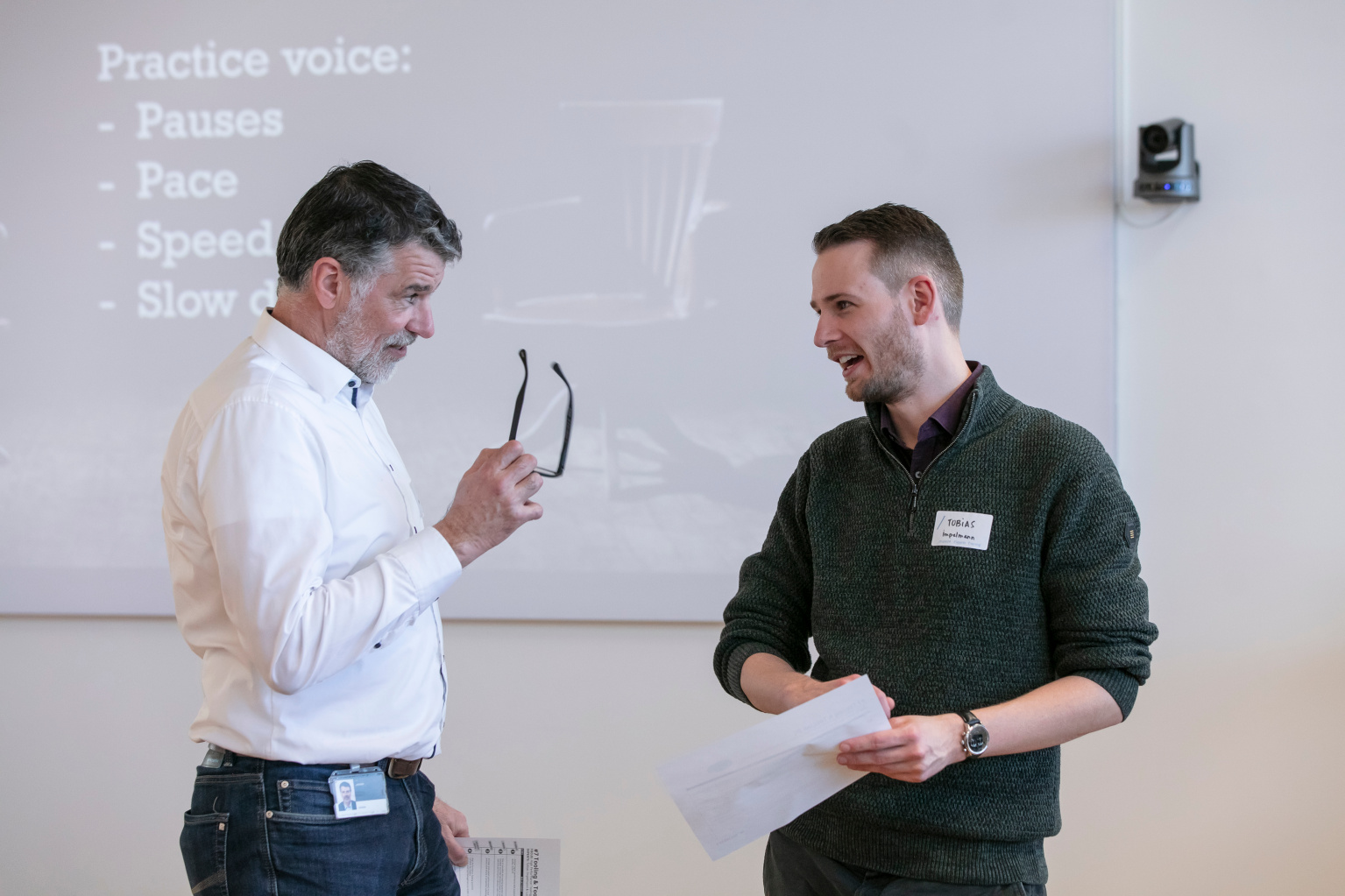
A shared communication method across your team creates compounding returns. One good presentation leads to another.
Every person has their own style. The result is a patchwork — some compelling, some not. There's no shared baseline, no shared language, no shared standard.
The same two or three people present every time. The rest watch. Confidence is unevenly distributed — but it doesn't have to be. Confidence comes from structure, not personality.
Each person knows their part. Together, the handoffs are rough, the narrative breaks, the client feels the seams. Group communication is a skill that needs to be built together.
You've done this before. One-day workshop, good energy, forgotten by the following week. The IS Method is designed differently — for lasting behaviour change, not one-day inspiration.
A team that communicates with one shared structure is a team that performs at a different level.
Three formats for teams at different stages. All built on the same IS Method.
The IS Method core framework in an intensive half-day format. Immediate practice, direct feedback, shared language from day one. Best for teams of 8–20.
From CHF 1,800
Learn more →Deep immersion over two days. Message architecture, delivery, group presentations, and live pitch practice. The fastest way to shift team communication as a whole.
From CHF 3,200
Learn more →A multi-cohort programme designed for large teams or company-wide deployment. Custom architecture, hybrid delivery, measurable outcomes and follow-up included.
From CHF 3,500/day
Learn more →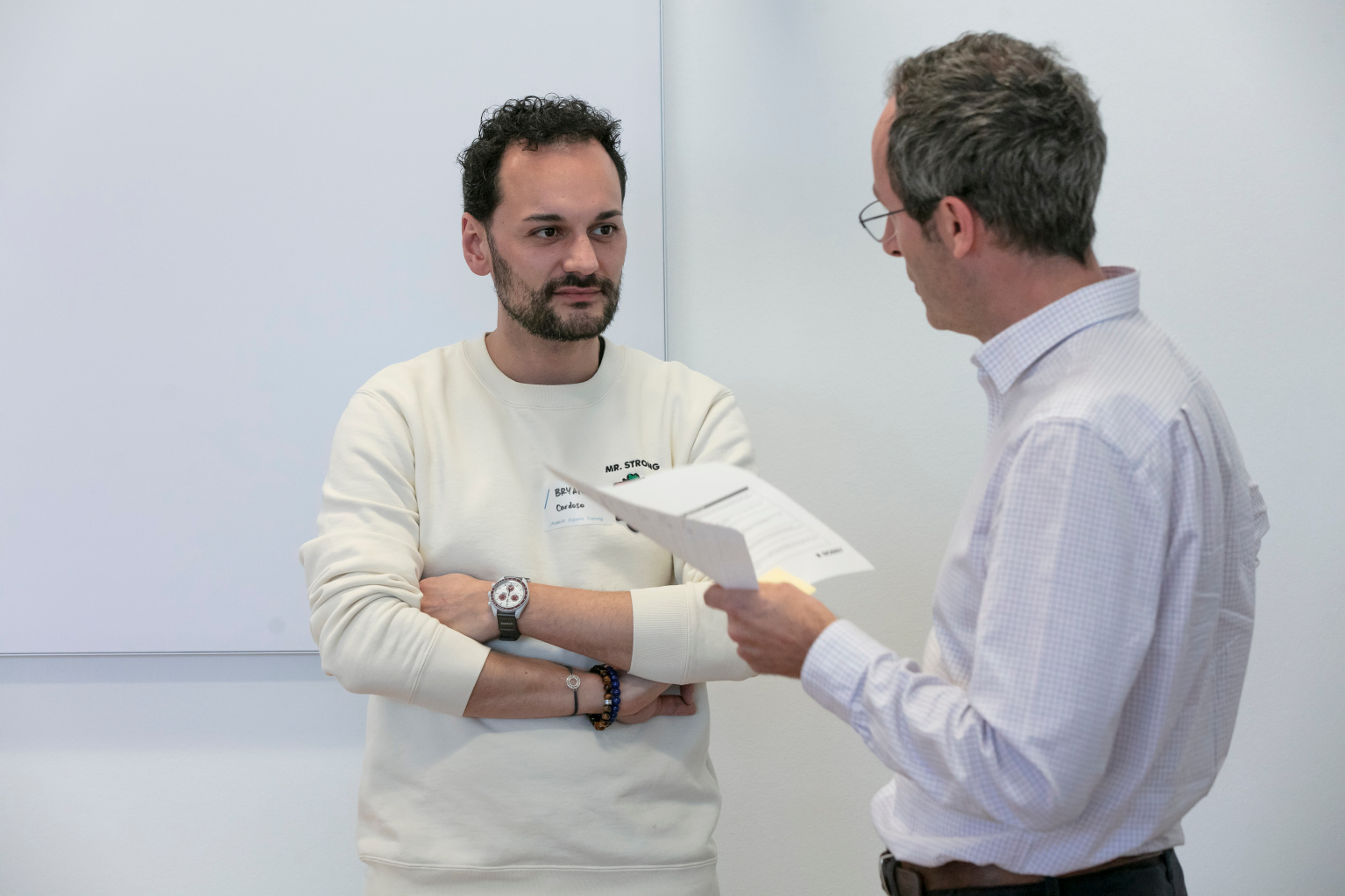
The TSIS programme deployed the IS Method across five consecutive cohorts, each of 48 participants. The goal was not just training — it was building a shared communication culture across the organisation. By cohort five, the language was already there before the workshop began.
"We used to prepare our presentations alone. Now we build them together with the same structure. The improvement across the team was visible in weeks."
"Before the workshop, two people on our team always presented while the others stayed quiet. Six months later, everyone contributes. The shared language made the difference — we all know how to structure a message now."
"Our client pitches used to feel disconnected — each person prepared separately and the handoffs showed. After the boot camp, we pitch as one unit. The client noticed immediately."
Book a free 30-minute call. We'll identify the right format and design it around your team's specific context.